
Applying for a UK visa from Canada requires careful preparation and an understanding of the specific requirements that apply to your residency status. Whether you are a Canadian citizen planning an upcoming trip, a Permanent Resident (PR), or a temporary resident (such as an international student or a foreign worker), the document preparation phase is the most critical part of your application. To successfully navigate the process, applicants must submit a compiled set of personal, financial, and travel-related documents that meet the strict standards set by UK Visas and Immigration (UKVI) [1.9].

For individuals residing in Canada, the general requirements for a standard UK visa application include a valid passport with blank pages, clear proof of legal residence in Canada, verifiable financial evidence showcasing your self-sufficiency, and detailed plans regarding your accommodation and travel itinerary in the UK. Because the process is digitalized, much of your application will be completed online and submitted via VFS Global, the official partner for UKVI in Canada [1.9, 1.12]. This comprehensive guide provides an expert-level, step-by-step breakdown of the documents you need to prepare, the fees and timelines for 2026, and strategies to prevent an administrative refusal.
Understanding UK visa requirements for residents of Canada
Before gathering your documents, you must understand your entry requirements. Your nationality and legal status in Canada dictate whether you need to apply for a full visa, a digital pre-travel authorization, or if you are subject to other immigration pathways.
Do Canadian citizens need a visa for the UK?
As of 2026, Canadian citizens generally do not require a traditional paper visa for short-term visits to the United Kingdom of up to six months [1.8, 1.10]. This covers activities such as tourism, short-term courses, business meetings, or visiting family and friends [1.3]. However, the UK’s Electronic Travel Authorisation (ETA) system is now fully mandatory for all Canadian passport holders [1.10].
Key points to keep in mind regarding the UK ETA for Canadian citizens in 2026 include:
- Mandatory Requirement: Every Canadian traveler, including children and infants, must obtain an approved ETA before boarding a flight, transit, or ferry bound for the UK [1.10].
- Cost and Validity: The ETA application fee is £20 (approximately C$38) [1.10]. Once approved, the ETA is digitally linked to your passport and remains valid for up to two years, allowing multiple entries for visits of up to six months each [1.10, 1.13].
- When a Visa Is Still Required: Canadian citizens who plan to work, study for more than six months, or settle in the UK cannot travel under an ETA and must apply for a specific long-term visa (such as a Skilled Worker or Student visa) [1.9].
Who needs a UK visa when applying from Canada?
While Canadian citizens enjoy visa-exempt status for short stays, this exemption does not automatically apply to non-citizens living in Canada [1.9]. If you are a Canadian Permanent Resident (PR) or a temporary resident—such as an international student holding a study permit or a foreign professional on a work permit—your eligibility to travel without a visa is based strictly on your country of citizenship, not your Canadian status [1.9].
Citizens of “visa national” countries (e.g., India, China, Nigeria, the Philippines, and many others) residing in Canada must apply for a Standard Visitor visa to visit the UK [1.3, 1.5]. When applying from within Canada, you must submit your application through the designated VFS Global visa application centres located across Canada, and providing verifiable proof of your ongoing legal status in Canada is an absolute prerequisite [1.9, 1.18].
Key UK visa categories for applicants in Canada
Depending on your purpose of travel and your nationality, you will need to apply for a specific visa category. Understanding these categories ensures you prepare the correct documents and avoid costly delays.
The UK Standard Visitor visa
The Standard Visitor visa is the most common application route for non-exempt residents of Canada traveling to the UK [1.3, 1.4]. This visa consolidated several older categories, meaning it is used for multiple travel purposes. It is designed for short-term stays of up to six months [1.3, 1.6].
Permitted activities under the Standard Visitor visa include:
- Tourism, leisure, and holidays in the UK.
- Visiting family members, partners, or close friends.
- Attending business conferences, trade fairs, negotiations, or seminars [1.3].
- Participating in short-term educational courses or exchanges lasting under six months [1.3].
- Receiving private medical treatment at a registered UK medical facility [1.5].
You are strictly prohibited from undertaking paid employment, doing unpaid work for a UK business, marrying or registering a civil partnership (unless applying for a Marriage Visitor visa), or accessing public funding during your stay [1.3].
Other common UK visa types
For those whose travel plans exceed a six-month visitor stay, other common pathways require highly specific and substantial supporting documents:
- Student Visa: For those enrolling in a full-time degree program or academic course lasting longer than six months. The core required document is a Confirmation of Acceptance for Studies (CAS) issued by a licensed UK educational institution [1.9].
- Skilled Worker Visa: For professionals moving to the UK for employment. This requires a valid Certificate of Sponsorship (CoS) from a licensed UK employer [1.4].
- Youth Mobility Scheme Visa: A popular working holiday option for eligible nationalities (including Canadian citizens aged 18 to 35) to live and work in the UK for up to two years.
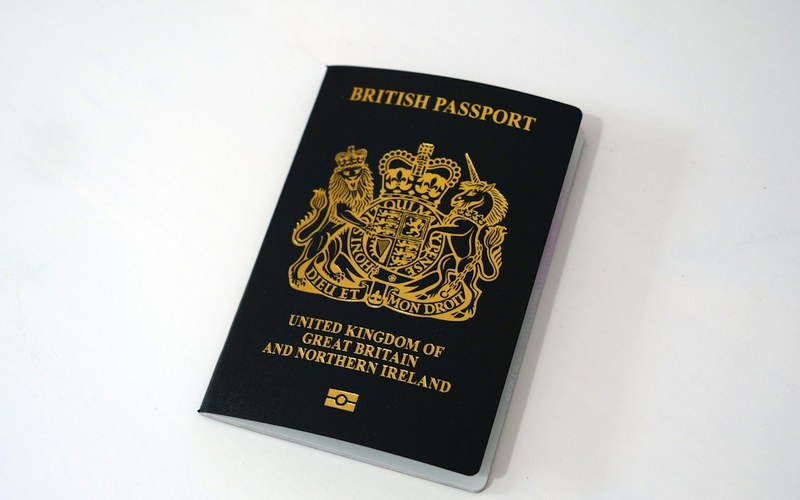
Comprehensive document checklist for your UK visa application from Canada
This is the most critical stage of your application. When applying from Canada, you must upload scanned, high-quality copies of your supporting documents to the online portal. Ensuring that each document meets UKVI guidelines is essential to secure an approval.
Essential personal and identity documents
These documents verify who you are, your travel history, and your legal status in Canada [1.9].
- Valid Passport: Your passport must be valid for the entire duration of your proposed stay in the UK and contain at least one fully blank double-sided page for the visa vignette [1.3].
- Previous Passports: You should scan and submit all pages of your expired passports from the past ten years [1.5]. This establishes a consistent history of international travel, which acts as a positive factor when the Entry Clearance Officer assesses your likelihood of returning to Canada [1.9].
- Proof of Legal Status in Canada: Non-Canadian citizens must provide unambiguous proof that they reside legally in Canada. Acceptable documents include a valid Permanent Resident Card (PR Card), a valid Canadian Work Permit, or a valid Study Permit [1.9]. This document must be valid not only at the time of application but also for the duration of your trip, ensuring you have the legal right to return to Canada.
- Biometric Information: You will need to attend a biometric appointment to have your fingerprints scanned and a digital photograph taken [1.9]. While not a document you upload, the printed biometric appointment confirmation sheet must be brought to your appointment [1.9].
Financial evidence and proof of funds
The UK government does not enforce a rigid, fixed minimum bank balance for visitor visas [1.5]. Instead, you must prove that you possess sufficient funds to easily cover your flight tickets, accommodation, and day-to-day living expenses without seeking work or relying on public funds [1.3].
- Recent Bank Statements: You must provide the most recent three to six months of personal bank statements [1.5]. These statements must be highly detailed, showing your name as the account holder, the dates, transactions, and the final balances. To avoid skepticism, avoid making sudden, large deposits of money into these accounts immediately prior to applying, as UKVI often flags “funds parking” as a reason for refusal.
- Payslips and Employment Letters: If you are employed in Canada, submit your last three to six months of payslips alongside a formal letter from your employer [1.5]. The employment letter should outline your role, start date, salary, and explicitly state that your annual leave has been approved for the specific dates of your UK trip.
- Sponsorship Letters: If a family member or third party is funding your travel, you must submit a formal sponsorship letter declaring their financial responsibility [1.5]. This must be accompanied by the sponsor’s own bank statements, proof of income, and a copy of their passport photo page [1.5].
| Type of Financial Evidence | Required Document Details |
|---|---|
| Personal Bank Statements | Last 3 to 6 months of active accounts; must show consistent salary deposits and a healthy closing balance [1.5]. |
| Canadian Payslips | Most recent 3 to 6 consecutive payslips matching your bank account deposit records [1.5]. |
| Employer Leave Letter | Printed on official company letterhead; details salary, job title, and approved leave period. |
| Sponsorship Documents | Signed letter from sponsor, their ID copies, and their personal bank statements [1.5]. |
| Secondary Income Proof | Investment statements, rental contracts, or business income registrations. |
Accommodation and travel details
You must show that you have a clear plan for where you will stay and when you plan to arrive and depart.
- Travel Itinerary: Provide a drafted itinerary showing your proposed travel dates. While showing a clear, thought-out flight itinerary is helpful, UKVI explicitly advises against purchasing non-refundable flights or making firm hotel bookings before your visa is fully approved and in your possession [1.3, 1.14].
- Accommodation Proof: Provide confirmed booking reservations (such as hotel or holiday rental pre-reservations). If you are staying with a host in the UK, you must submit a signed invitation letter from them outlining their full address, their relationship to you, the dates you will be staying, and a copy of their British passport or UK residence permit [1.4].
Documents proving purpose of visit
To secure a positive assessment, you must prove both the legitimacy of your travel intentions and your ties to Canada, showing that you will return home at the end of your visit [1.9].
- Personal Cover Letter: This is a highly effective way to summarize your application. In the cover letter, state the exact reason for your trip, who you are traveling with, a summary of your planned itinerary, how you will fund the travel, and a clear list of the ties that require your return to Canada (such as your job, family commitments, or studies).
- Educational Enrolment Letters: If you are an international student in Canada, provide an official letter of enrollment from your Canadian college or university confirming that you are a student in good standing and are expected to return to continue your studies after your trip.
- Specific Purpose Documents: For business visits, provide a formal invitation letter from the registered UK company or the organization hosting the conference [1.3]. For family visits, provide birth or marriage certificates to clearly demonstrate your relationship to the relatives you are visiting.
Additional documents for specific situations
Depending on your individual circumstances or age, you may need to prepare supplementary documentation:
- For Minor Applicants (Under 18): If a minor is traveling alone or with only one parent, you must provide a signed parental consent letter from both parents/guardians, along with copy of the minor’s full birth certificate and copy of the parents’ passports.
- Certified Translations: UKVI enforces a strict rule that every document submitted that is not written in English or Welsh must be accompanied by a professional, certified translation [1.5]. This is particularly relevant for documents in French or other global languages issued to Canadian residents. The translation must include:
- Confirmation from the translator that it is an accurate translation of the original document.
- The date of the translation.
- The translator’s full name, credentials, and signature.
- The translator’s or translation company’s contact details.
Step-by-step UK visa application process from Canada
Once you have organized your documents, you can begin the formal application process. Following these steps in order will ensure your application runs smoothly.
1. Determine your visa type and eligibility
First, access the official GOV.UK online “Check if you need a UK visa” tool to confirm your requirements based on your current citizenship [1.9]. Identify the specific visa category that aligns with your travel plans, and thoroughly read the guidance for that category to confirm that you satisfy the fundamental eligibility criteria [1.3, 1.9].
2. Gather all required documents
Using the comprehensive checklist provided above, begin collecting all required files. Every scanned file must be completely legible, clear, and saved in a standard digital format (such as PDF or JPEG). Organizing your digital files into clearly named folders (e.g., “Financials,” “Identity,” “Canadian Status”) prevents accidental omissions during the upload phase.
3. Complete the online application form
All applications must be initiated online via the official GOV.UK portal [1.9]. Register an account, and fill out the form carefully and honestly. Discrepancies between what you write in the form and the documents you provide are a frequent cause of refusal. Review your answers multiple times before finalizing the application.
4. Pay the visa application fee
Once the form is completed, you must pay the visa fee online using a credit or debit card [1.10]. The standard Standard Visitor visa fee is £135 as of 2026 [1.3, 1.4]. Note that fees are non-refundable, even in the case of a refusal [1.3]. If you are applying for a long-term visa (such as a Student or Work visa), you will also be prompted to pay the Immigration Health Surcharge (IHS) at this stage [1.4].
5. Book and attend your biometric appointment
Upon completing the payment, the online system will redirect you to the VFS Global platform to book a biometric appointment in Canada [1.9]. You must visit a physical Visa Application Centre (VAC) to submit your fingerprints and have your photograph captured [1.9].
VFS Global operates multiple VAC locations across Canada, including:
- Toronto [1.18]
- Vancouver
- Ottawa [1.21]
- Edmonton
- Montreal
- Halifax [1.22]
- Calgary [1.19]
When attending your appointment, make sure to bring your valid passport, your printed appointment confirmation letter, and a copy of your completed application checklist [1.9].
6. Submit your supporting documents
You can choose between uploading your scanned documents yourself directly to the VFS Global digital portal before your appointment, or paying a scanning assistance fee to have the staff at the VAC scan them for you during your biometric appointment [1.19]. Self-uploading is highly recommended as it saves money and gives you total control over the clarity and completeness of your file submission.
7. Await a decision
After your biometric data is captured, your application will be securely sent to the UKVI decision-making center [1.9]. You can track the progress of your application through the VFS Global portal. Once a decision is finalized, you will receive an automated email notification, and your passport will be returned to you either via a secure courier service or made available for collection at the VAC where you attended your appointment [1.7, 1.19].

UK visa fees and processing times for applicants in Canada (2026)
Having a clear understanding of the costs and processing timelines helps you plan your trip without unnecessary pressure.
Current visa application fees
Fees are set by the UK Home Office and are subject to currency conversion rates when paying in Canadian Dollars (CAD) [1.9]. The table below lists the primary visa application fees effective in 2026:
| Visa Type | Duration | Fee (GBP) | Additional Costs |
|---|---|---|---|
| Standard Visitor Visa [1.4] | Up to 6 Months [1.4] | £135 [1.4] | None [1.4] |
| Long-Term Visitor Visa [1.4] | Up to 2 Years [1.4] | £506 [1.4] | None [1.4] |
| Long-Term Visitor Visa [1.4] | Up to 5 Years [1.4] | £903 [1.4] | None [1.4] |
| Long-Term Visitor Visa [1.4] | Up to 10 Years [1.4] | £1,128 [1.4] | None [1.4] |
| Student Visa [1.6] | Course Duration [1.4] | £558 [1.6] | IHS Fee Applies (£776/year) [1.7] |
| Skilled Worker Visa [1.6] | Up to 3 Years [1.6] | £819 [1.6] | IHS Fee Applies (£1,035/year) [1.7] |
Estimated processing times
The standard processing time for a Standard Visitor visa, Student visa, or Skilled Worker visa applied for outside the UK is three weeks (15 working days) [1.15, 1.16]. This period starts from the date you complete your biometric appointment at the VFS Global VAC, not when you submit the online application form [1.9, 1.15].
If you require a faster decision, you can opt for the Priority Service (for an additional fee of £500), which targets a decision within 5 working days [1.3, 1.15]. Note that actual processing times can fluctuate depending on seasonal surges (especially during the summer and late winter holiday periods), and complex cases may take longer if UKVI needs to run additional checks on your documents [1.3, 1.16].
Common reasons for UK visa refusal and how to avoid them
The Standard Visitor visa is subject to rigorous evaluation by the Entry Clearance Officer (ECO) [1.9]. Understanding the common pitfalls will significantly increase your chances of success.
| Common Refusal Reason | How to Avoid It |
|---|---|
| Unexplained “Funds Parking” | Avoid transferring large, unexplained cash amounts into your bank accounts just before applying [1.5]. If a transaction is necessary, provide a written explanation and supporting documents (e.g., sale of property or car). |
| Weak Ties to Canada [1.9] | Provide extensive proof of your ongoing employment, rental or mortgage contracts, family ties in Canada, and an enrollment letter if you are a student [1.9]. |
| Inconsistent Information | Ensure all dates, salary figures, and travel plans noted on your application form match your supporting bank statements and employment letter exactly. |
| Lack of Translation [1.5] | Submit fully certified, professional translations for any document (such as pay slips or bank papers) not originally issued in English or Welsh [1.5]. |
| Vague Travel Intentions | Provide a logical, clear personal cover letter outlining the itinerary of your stay, making it obvious that your plans are realistic and structured. |
What happens after your UK visa is approved?
Once your application is approved, your passport will be returned to you containing a physical visa vignette (a sticker printed with your details, visa conditions, and validity dates) [1.7]. For student and skilled worker visas, you will also receive an official decision letter detailing where and how to collect your Biometric Residence Permit (BRP) upon your arrival in the UK [1.7].
Before traveling, carefully review the printed dates and conditions on your visa vignette to ensure there are no clerical errors. Carry a digital or physical copy of your key supporting documents (such as your return flights, accommodation reservation, and invitation letter) in your hand luggage [1.9]. When arriving at a UK port of entry, Border Force officers may ask a few quick questions regarding the purpose of your trip and your return plans [1.9]. While your visa grants permission to travel, the final entry clearance is determined by the officer at the border [1.3].
Frequently asked questions
What is the ETA for Canadians traveling to the UK?
The Electronic Travel Authorisation (ETA) is a digital pre-travel entry permit implemented for all visa-exempt nationalities, including Canadian citizens, traveling to the UK for short visits of up to six months [1.8, 1.10]. It is not a visa, but an online authorization that costs £20, is valid for up to two years, and must be approved before you board your flight [1.10, 1.13].
Can I apply for a UK visa from Canada if I am not a Canadian citizen?
Yes, you can apply from within Canada if you hold a valid, legal status such as a Permanent Resident (PR) card, study permit, or work permit [1.9]. You will need to provide your valid Canadian immigration document as part of your application to prove that you are legally residing in Canada [1.9].
How much money do I need to show for a UK Standard Visitor visa application?
There is no single fixed amount mandated by UKVI [1.5]. You must show a balance that logically covers your flight costs, accommodation, and average daily expenses (often recommended to budget around £100 to £150 per day) while leaving a reasonable financial buffer to prove that you can support yourself without trouble [1.5].
What are the UK visa application centres (VACs) in Canada?
VFS Global operates official UK visa application centres in several major cities across Canada, including Toronto, Vancouver, Ottawa, Montreal, Edmonton, Halifax, and Calgary [1.18, 1.19, 1.21, 1.22]. Some locations operate on a part-time basis or may require an additional user fee, so it is important to check the current availability when scheduling your appointment on the VFS Global website [1.19, 1.22].
Can I get my UK visa faster with a priority service?
Yes, UKVI offers a Priority Visa service for an additional £500, which expedites the processing time to 5 working days from the date of your biometric appointment [1.3, 1.15]. It is important to note that opting for priority service only accelerates the processing timeline; it does not influence the likelihood of your application being approved [1.16, 1.19].

Conclusion
Navigating the UK visa application process from Canada is highly straightforward when you follow a structured approach and prepare your documents meticulously. By taking the time to compile an organized, fully translated set of personal, financial, and travel documents, you dramatically increase your chances of a smooth, successful application process [1.5, 1.9]. Remember to utilize official portals like GOV.UK and VFS Global to double-check the most up-to-date fees and rules for your specific category before starting [1.9]. With your documents in order and a clear understanding of the step-by-step process, you can confidently begin your application and look forward to your journey to the United Kingdom.
