
Planning a trip to Canada for tourism, business, or a short study program in 2026? This electronic entry requirement is not a visa, but rather an authorization linked to your passport, allowing Canadian authorities to pre-screen travellers for security purposes. While most visa-exempt foreign nationals require an eTA for air travel, certain groups, such as Canadian citizens and U.S. citizens, are exempt. This comprehensive guide covers everything you need to know about the Canada eTA for 2026, from eligibility and application steps to costs, validity, and what to expect upon arrival, ensuring a smooth journey.
What is the Canada eTA?
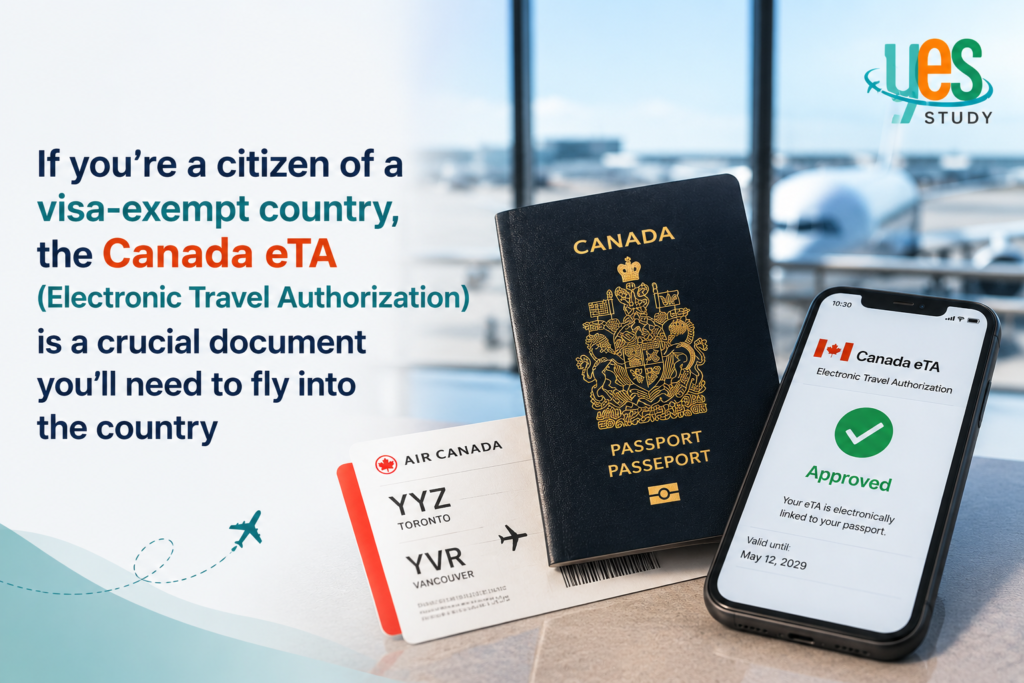
The Canada eTA, or Electronic Travel Authorization, is a digital travel document that most visa-exempt foreign nationals need to enter Canada by air. Introduced by the Government of Canada, its fundamental purpose is to screen travellers before they even board their flight, enhancing Canada’s border security by identifying potential risks. It is electronically linked to your passport and, once approved, remains valid for multiple entries over its duration.
It’s important to clarify that an eTA is distinct from a temporary resident visa (TRV), often referred to as a visitor visa. While both allow foreign nationals to travel to Canada, an eTA is for citizens of countries that don’t typically require a full visa for short visits but now need pre-authorization for air travel. A TRV, on the other hand, is a physical stamp or document placed in a passport and is required for citizens of countries that are not visa-exempt. The eTA simplifies the entry process for eligible travelers, but it does not guarantee entry into Canada; that final decision rests with a Canada Border Services Agency (CBSA) officer upon your arrival.
- Electronic Travel Authorization (eTA): A digital travel document linked to a passport for pre-screening purposes, required for visa-exempt foreign nationals entering Canada by air.
- Visa-exempt foreign national: A citizen of a country that generally does not need a traditional visa for short visits to Canada, but now requires an eTA for air travel.
Think of the Canada eTA as Canada’s version of the U.S. ESTA (Electronic System for Travel Authorization) or the upcoming ETIAS for European Union countries. These systems streamline travel for low-risk visitors while maintaining national security.
For more detailed information, you can always refer to the official IRCC page on What is an eTA.
Who needs a Canada eTA? Eligibility and exemptions
Understanding whether you need a Canada eTA is the first critical step in your travel planning. This section will help clarify who falls under the eTA requirement and who is exempt.
Countries whose citizens require an eTA
The general rule is straightforward: if you are a citizen of a country that does not require a visa to enter Canada, and you are flying to or transiting through a Canadian airport, you will need an eTA. This applies to citizens from a broad range of countries across the globe.
Some prominent examples of countries whose citizens typically require an eTA for air travel include:
- Most European Union countries (e.g., Germany, France, Italy, Spain)
- Australia
- Japan
- New Zealand
- United Kingdom
- Singapore
- South Korea
It is crucial to note that while citizens of these countries are generally visa-exempt for short stays, the eTA is a mandatory pre-screening for air travel. A German citizen flying from Frankfurt to Toronto, for example, must have an approved eTA linked to their passport before boarding their flight.
Visa-exempt country: A nation whose citizens are typically allowed to visit Canada for short periods without needing a traditional temporary resident visa, but may now require an eTA for air travel.
What happens after your eTA application?
Once you’ve submitted your eTA application, the waiting game begins. Most applications are approved within minutes, but some may take longer. Here’s what to expect next.
Receiving your eTA approval email
If your application is successful, you will receive an approval email from Immigration, Refugees and Citizenship Canada (IRCC). This email typically comes from the official address ‘IRCC.CitImm.Canada@cic.gc.ca’. It’s vital to check your spam or junk folder if you don’t see it in your inbox promptly.
The approval email will contain critical information:
- Your unique eTA number
- The validity date of your eTA
- The passport number to which your eTA is electronically linked
While the eTA is linked digitally to your passport, we strongly advise travellers to keep a copy of this approval email, either digitally on their phone or as a printout. Noting down your eTA number can also be incredibly useful, especially if you need to make inquiries with an airline or check your status later. For example, a traveler once contacted us because their airline asked for their eTA number at check-in, and having the email readily available saved them a lot of stress.
What to do if your eTA is refused
While many eTA applications are approved quickly, some do get refused. If your eTA application is denied, you will receive a refusal email from IRCC. This email should ideally provide the specific reason for the refusal. Understanding this reason is paramount before taking any further action.
Here are the possible next steps you might consider:
- Reapply: If the refusal was due to a simple mistake on your application, such as a typo in your passport number, an incorrect date of birth, or missing information, you might be able to correct the error and reapply. Ensure all details are accurate before resubmitting.
- Address inadmissibility: If the refusal is linked to inadmissibility – perhaps due to past criminal convictions, serious health issues, or misrepresentation on a previous immigration application – this becomes a more complex situation. Overcoming inadmissibility often requires significant legal intervention, such as demonstrating rehabilitation or applying for a Temporary Resident Permit (TRP). This is where professional advice from an experienced immigration consultant can be invaluable. You can find more information on overcoming inadmissibility on the IRCC website.
- Apply for a Temporary Resident Visa (visitor visa): If you are unable to meet the eTA eligibility criteria, or if the issues leading to refusal are too complex for an eTA resolution, applying for a traditional Temporary Resident Visa (TRV) may be your next best option. This is a much longer and more involved application process, requiring more documents and an interview in many cases, but it can be a viable alternative.
Our firm, Yes Study, frequently guides individuals through these challenging situations. We always advise against reapplying blindly or without fully understanding why your initial eTA was refused. A clear strategy, often developed with the help of an expert, will save you time, money, and frustration.
Checking your eTA status
If you’ve applied for an eTA and haven’t received an email, or simply want to confirm its status, you can easily do so online. IRCC provides an official tool for checking your eTA application status. You will typically need your passport number and either your eTA number (if one was assigned) or your application number to access this information. This is particularly useful if you suspect the approval email went missing or if there’s an unexpected delay in processing.
Traveling to Canada with an eTA
An approved eTA gets you to the boarding gate, but smooth travel also depends on being prepared for your flight and arrival in Canada.
Essential checks before your flight
Before you even leave for the airport, double-check these critical points to ensure a hassle-free journey:
- Passport Match: Ensure you are traveling with the *exact same passport* that your eTA is linked to. Airlines scan your passport, and if the details don’t match the eTA, you will likely be denied boarding. We’ve seen cases where students, having renewed their passport, forgot to apply for a new eTA linked to the new passport, leading to last-minute panic at the airport.
- Passport Expiry: Verify that your passport is valid for at least six months beyond your intended stay in Canada. While an eTA is valid for up to five years, your entry authorization is tied to your passport’s validity.
- eTA Confirmation (Optional but Recommended): Although not strictly required, having a digital or printed copy of your eTA approval email can be helpful. It contains your eTA number and serves as proof of authorization, especially if an airline or border agent has a query.
- Supporting Documents: Have details of your accommodation, return flight tickets, and proof of sufficient funds for your stay readily accessible. While not always asked for, it’s best to be prepared.
Arrival procedures at the Canadian port of entry
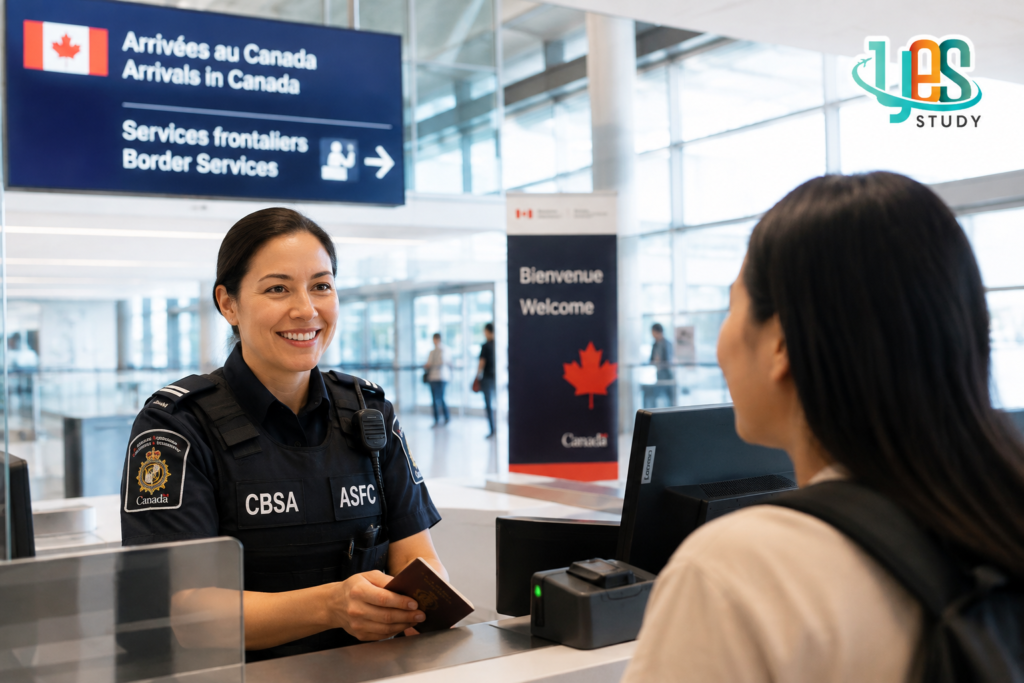
Remember, an eTA provides authorization to board a flight to Canada; it does not guarantee entry. The final decision on your admissibility and the length of your stay rests with a Canada Border Services Officer (CBSA) at your port of entry (typically an airport).
When you arrive, you will proceed to customs and immigration. You may use primary inspection kiosks (PIK) or be directed to a CBSA officer. Be prepared to answer questions truthfully and respectfully. Common questions a CBSA officer might ask include:
- Purpose of your visit: Are you here for tourism, business, visiting family, or short-term study? Be clear and concise.
- Length of your intended stay: How long do you plan to remain in Canada? Align this with your return ticket.
- Where you will be staying: Have hotel bookings, address of friends/family, or study accommodation details ready.
- How you will support yourself financially: Officers may ask for proof of funds, such as bank statements or credit cards, to ensure you can cover your expenses during your stay without working illegally.
- Your ties to your home country: This helps demonstrate your intent to leave Canada at the end of your authorized stay. You might be asked about your job, family, property, or other commitments in your home country.
It’s crucial to have any supporting documents organized and easily accessible, such as your return ticket, hotel bookings, invitation letters (if visiting family/friends), and proof of funds. Honesty and a cooperative attitude are your best allies when interacting with CBSA officers. From my experience working with thousands of students and visitors, preparedness and clear communication make a significant difference in ensuring a smooth entry process.
Frequently asked questions
Who is eligible for a Canada eTA?
The Canada eTA is designed for visa-exempt foreign nationals who are flying to or transiting through a Canadian airport. This includes citizens from countries like the United Kingdom, most European Union nations, Australia, and Japan. Notably, U.S. citizens are exempt and do not need an eTA. Similarly, Canadian citizens and permanent residents do not require an eTA. Those entering Canada by land or sea are also exempt from the eTA requirement. For a detailed breakdown, please refer to our “Who needs a Canada eTA?” section above.
How long is the Canada eTA valid for?
A Canada eTA, once approved, is typically valid for up to five years from the date of issue or until your passport expires, whichever comes first. During its validity period, it allows for multiple entries into Canada. Each individual stay is generally permitted for up to six months, though the final duration is at the discretion of the Canada Border Services Officer upon your arrival. It’s essential to exit Canada before your authorized stay expires.
What is the current fee for a Canada eTA?
As of 2026, the official fee for a Canada eTA application is CAD $7. This fee is non-refundable and must be paid online using a credit or debit card during the application process on the official IRCC website. Beware of third-party websites that charge inflated fees for eTA services; always use the government’s official portal to avoid scams.
Can I travel to Canada without an eTA if I have a valid Canadian study or work permit?
Yes, if you are a foreign national from an eTA-required country and already hold a valid Canadian study permit or work permit, you generally do not need a separate eTA to fly to Canada. Your valid permit itself serves as your authorization to travel and enter Canada, provided it is still valid and you are flying into a Canadian airport. This is a common situation for international students returning to Canada after a break. Always ensure you carry your valid permit document with you when traveling.
What should I do if my Canada eTA application is refused?
If your Canada eTA application is refused, the first step is to carefully review the refusal letter from IRCC to understand the specific reason for denial. If it was due to a simple error, you might correct and reapply. For more complex reasons, such as inadmissibility, you may need to address the underlying issue or consider applying for a temporary resident visa (visitor visa) instead. For intricate cases, especially those involving inadmissibility, seeking advice from an experienced immigration consultant like Yes Study is highly recommended to explore your options effectively. Our “What to do if your eTA is refused” section provides more in-depth guidance.
Conclusion
The Canada eTA is an indispensable component of travel planning for millions of visa-exempt foreign nationals looking to visit Canada by air in 2026. This electronic authorization plays a vital role in Canada’s border security framework, allowing for efficient pre-screening of travelers. By understanding who needs an eTA, meticulously following the official application process on the IRCC website, and being prepared for arrival procedures, you can significantly enhance your travel experience.
We hope this comprehensive guide has demystified the eTA process, providing you with the confidence and knowledge needed for a smooth journey. At Yes Study, our goal is to simplify complex immigration and travel procedures, allowing you to focus on the exciting opportunities that await you in Canada, whether it’s for study, work, or leisure. Safe travels!
